
Malta History
Prehistoric and Ancient Period
From the first settlers to Roman Malta
Malta’s earliest story begins thousands of years before its fortified cities, with farming communities, monumental temples and successive Mediterranean cultures.
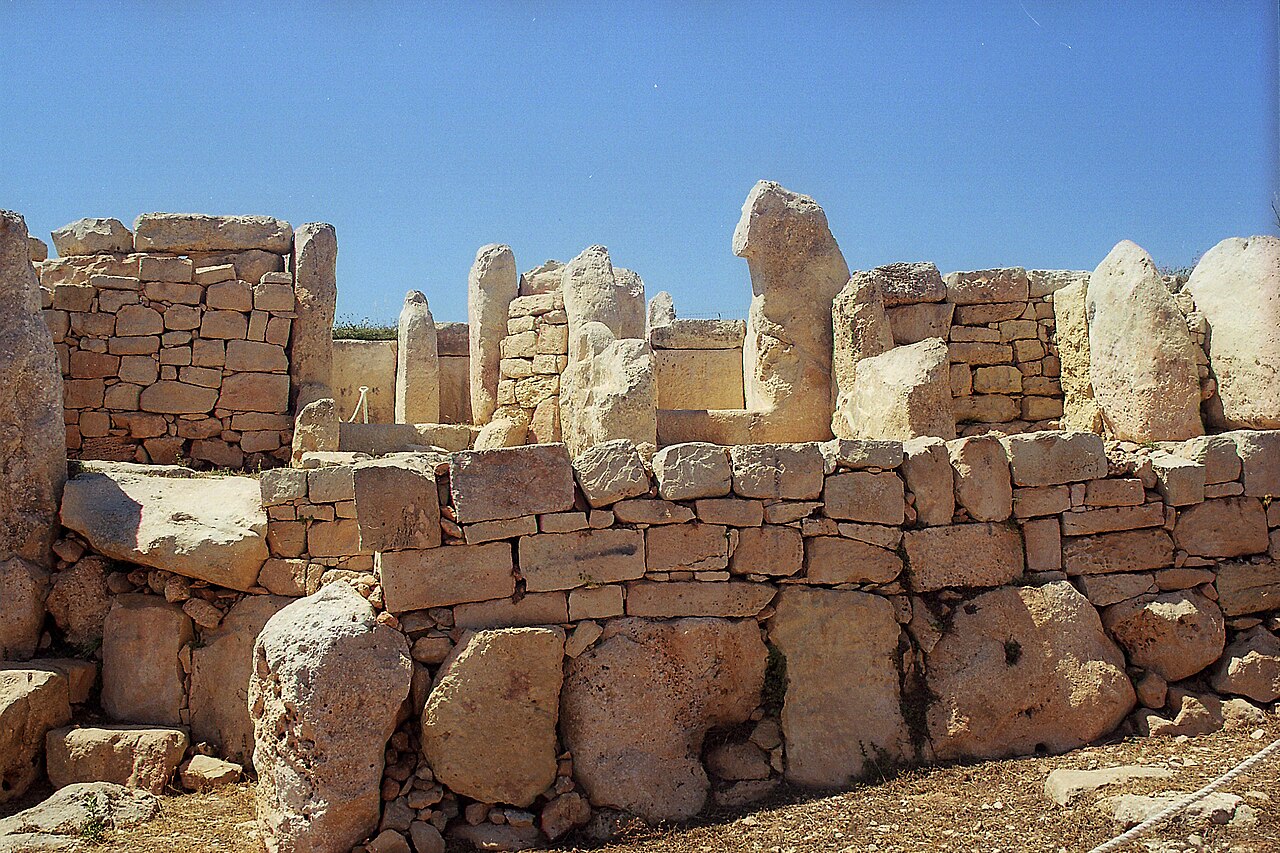
The first farming communities reached the Maltese islands around 5900 BC. Over generations they developed a distinctive temple-building culture. Between roughly 3600 and 2500 BC, communities raised the great megalithic complexes at places such as Ġgantija, Ħaġar Qim, Mnajdra and Tarxien. Their carefully arranged chambers, carved stone and ritual objects make these sites some of the most remarkable surviving monuments of European prehistory.
After the temple period, Bronze Age communities reused some older sites and established new defended settlements. Malta’s position between Sicily and North Africa then drew it into wider trading networks. Phoenician settlers arrived during the first millennium BC, followed by Carthaginian rule. Their influence survives in burial practices, inscriptions and the islands’ Semitic place-name Melite.
Rome took control of Malta in 218 BC during the Second Punic War. The islands became part of the Roman province of Sicily, supported by agriculture, maritime trade and local industries. Villas, mosaics, catacombs and the remains of the Roman town at Melite reveal a prosperous society whose legacy continued into late antiquity.
Megalithic temples • Bronze Age settlements • Phoenician, Carthaginian and Roman Malta
← Back to History