
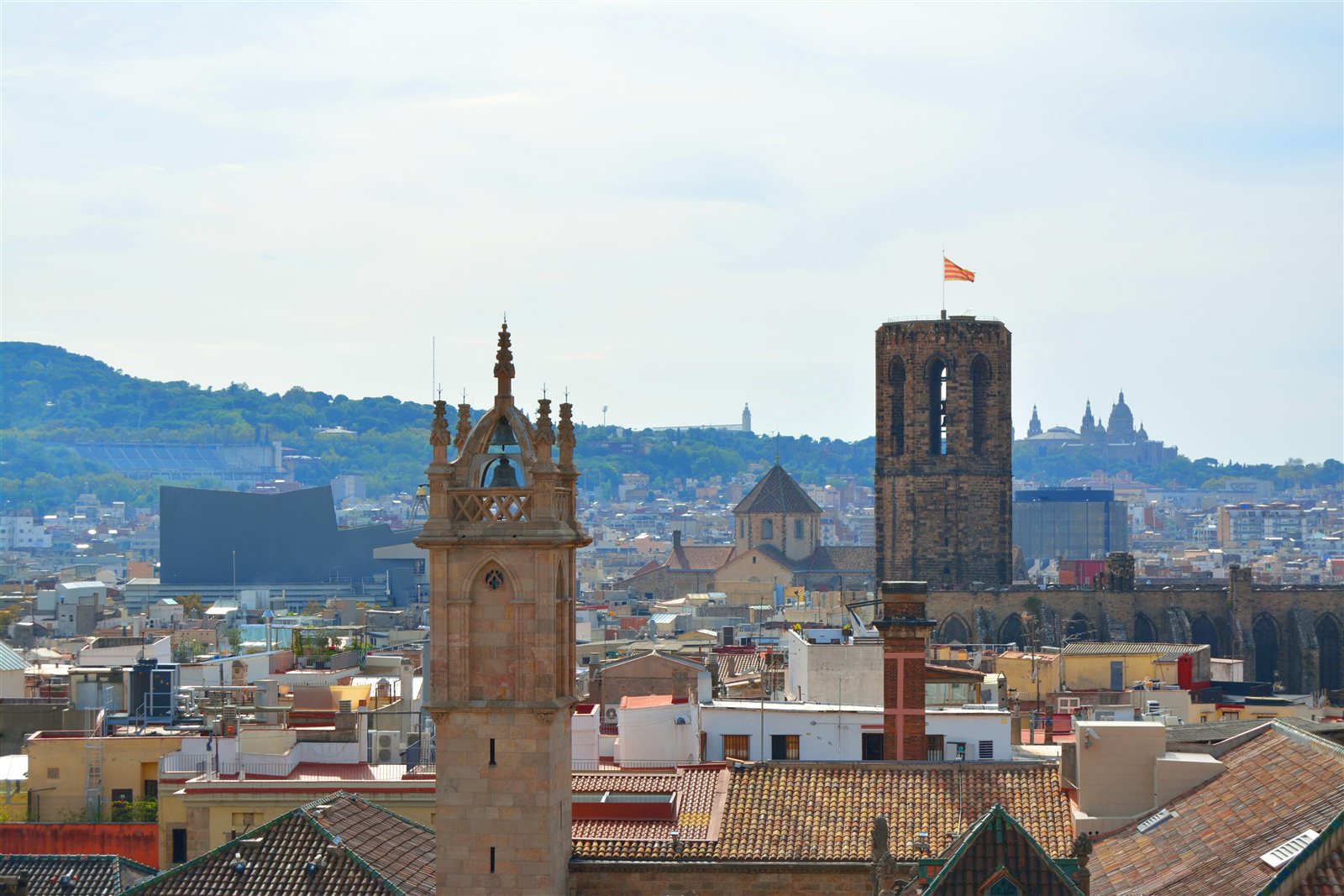
Barcelona is a city where architecture, history, culture and everyday life seem to blend effortlessly together. One moment you can be standing beneath one of Antoni Gaudí's extraordinary buildings and, a short walk later, find yourself wandering through narrow medieval streets or relaxing in one of the city's parks.
During my visit, I explored some of Barcelona's most recognisable landmarks, but I found that the city was best experienced by grouping nearby attractions together rather than treating each place as an individual stop.
From Gaudí's architectural masterpieces to the Gothic Quarter, Montjuïc and Barcelona's green spaces, these are the places that defined my visit to Barcelona.
Discovering the Barcelona of Antoni Gaudí
It is almost impossible to visit Barcelona without encountering the work of Antoni Gaudí. His distinctive architectural style has become one of the defining characteristics of the city.
Several of the places I visited provided very different examples of his work.
Casa Batlló
Walking along Passeig de Gràcia, Casa Batlló immediately stands apart from the surrounding buildings.
Its curved façade, colourful mosaics and unusual balconies make the building look almost organic. There are very few conventional straight lines, and the design seems to change depending on where you are standing.
Although the building is impressive from the street, going inside reveals just how extensively Gaudí applied his ideas throughout the property.
The windows, staircases, walls, ceilings and internal spaces all contribute to the experience.
Casa Batlló is one of those buildings where it is worth taking your time rather than simply photographing the façade and moving on.
Casa Milà – La Pedrera
A short distance along Passeig de Gràcia is another of Gaudí's famous creations: Casa Milà, commonly known as La Pedrera.
Where Casa Batlló is colourful and decorative, Casa Milà feels heavier and more sculptural.
Its enormous stone façade curves around the building, while the balconies appear almost randomly positioned across its surface.
One of the most memorable parts of Casa Milà is the rooftop. Its unusual chimneys and architectural structures create a landscape unlike a conventional rooftop, while also providing views across Barcelona.
Because Casa Batlló and Casa Milà are relatively close to one another, they are easy to visit as part of the same walk.
Seeing both also demonstrates just how differently Gaudí approached each building.
Basilica of the Sagrada Família
The Basilica of the Sagrada Família is undoubtedly one of Barcelona's most recognisable landmarks.
The first thing that struck me was its sheer scale.
The exterior contains an extraordinary amount of detail, with towers rising high above the surrounding neighbourhood and façades covered with sculptures and architectural features.
The interior creates a completely different impression.
Huge columns rise towards the ceiling and branch outward, creating an almost forest-like appearance. Light entering through the stained-glass windows introduces different colours throughout the interior.
It is one of those buildings where photographs struggle to communicate the actual scale of what you are seeing.
Whether you are particularly interested in architecture or not, the Sagrada Família is difficult to ignore when visiting Barcelona.
Park Güell
Park Güell offers a very different Gaudí experience.
Instead of exploring a single building, you enter an environment where architecture has been incorporated into the surrounding landscape.
Colourful mosaics, unusual structures, pathways and gardens combine to create one of Barcelona's most distinctive public spaces.
The elevated position of the park also provides views across parts of the city.
Park Güell is worth exploring slowly. Some of the most interesting details are found away from the most photographed areas.
Casa del Guarda
While exploring Park Güell, I also visited Casa del Guarda.
The small building forms part of the architectural ensemble at the entrance to the park and was originally designed as the caretaker's residence.
Its curved roof and distinctive appearance make it instantly recognisable as part of Gaudí's work.
Because it is located within Park Güell, Casa del Guarda is an easy addition to a visit to the park rather than requiring a separate trip.
Exploring Barcelona's Historic Centre
After experiencing Gaudí's Barcelona, the historic centre offers a completely different side of the city.
The broad avenues and Modernist buildings give way to narrow streets, small squares and centuries-old architecture.
Gothic Quarter
The Gothic Quarter was one of my favourite areas simply to walk around.
Rather than following a strict route, I found that wandering through its narrow streets was part of the experience.
Small squares suddenly appear between buildings, alleyways lead in unexpected directions and historic architecture surrounds you almost everywhere.
It is an area where getting slightly lost isn't necessarily a bad thing.
The Gothic Quarter also works particularly well as a walking destination because several other interesting places are located nearby.
Cathedral of Barcelona
One of the major landmarks within the Gothic Quarter is the Cathedral of Barcelona.
Its imposing Gothic architecture contrasts dramatically with the narrow streets surrounding it.
The square in front of the cathedral provides one of the best opportunities to appreciate the scale of the building before exploring the surrounding streets.
Visiting the cathedral and then continuing through the Gothic Quarter made much more sense to me than treating them as completely separate attractions.
Picasso Museum Barcelona
Another cultural stop in Barcelona's historic centre was the Picasso Museum Barcelona.
The museum provides an opportunity to explore the work of Pablo Picasso while also learning more about his connection with Barcelona.
It also offers a very different experience from the architecture-focused attractions elsewhere in the city.
Its location means it can easily be incorporated into a day exploring the older parts of Barcelona.
Mercat de la Boqueria
Mercat de la Boqueria offers another completely different experience.
The famous market is filled with stalls displaying fruit, vegetables, meat, seafood and many other foods.
It is colourful, busy and full of activity.
After spending considerable time visiting monuments, museums and historic buildings, the market provides an opportunity to experience a more everyday side of Barcelona.
Barcelona's Grand Squares and Monuments
Some of Barcelona's most memorable locations aren't necessarily attractions that require hours to explore.
Instead, they act as landmarks connecting different parts of the city.
Plaça de Catalunya
Plaça de Catalunya is one of Barcelona's major central meeting points.
The enormous square sits between the older parts of Barcelona and the Eixample district and acts as a useful reference point when exploring the city.
It is also an area you may find yourself passing through several times while travelling between different attractions.
Rather than being somewhere I would dedicate half a day to visiting, Plaça de Catalunya works particularly well as part of a wider walking route through central Barcelona.
Arc de Triomf
The Arc de Triomf is another immediately recognisable Barcelona landmark.
Its red-brick construction gives it a distinctive appearance compared with many triumphal arches found elsewhere in Europe.
The wide pedestrian promenade surrounding the monument also makes the area pleasant to explore on foot.
From the Arc de Triomf, it is possible to continue towards Ciutadella Park, making the two locations easy to combine.
Plaça d'Espanya
Plaça d'Espanya is one of Barcelona's largest and most impressive public squares.
It also acts as a natural gateway towards Montjuïc.
From here, the character of the city begins to change as you move towards the museums, fountains, gardens and elevated viewpoints of Montjuïc.
For that reason, I found Plaça d'Espanya worked particularly well as the starting point for exploring this part of Barcelona.
Exploring Montjuïc
Montjuïc deserves a substantial amount of time because several of Barcelona's attractions can be found within the same general area.
It also offers a welcome change from the dense streets of central Barcelona.
Museums, gardens, historic buildings and viewpoints are spread across the hill, making Montjuïc feel almost like a destination within the city itself.
Museu Nacional d'Art de Catalunya
One of the most impressive buildings on Montjuïc is the Museu Nacional d'Art de Catalunya, commonly known as MNAC.
The museum occupies the enormous Palau Nacional, which dominates the surrounding area.
Even before entering the museum, the building and its location are impressive.
The elevated position also provides excellent views towards Plaça d'Espanya and across Barcelona.
Inside, the museum contains an extensive collection of Catalan art covering different periods.
Magic Fountain of Montjuïc
Below the Palau Nacional is the Magic Fountain of Montjuïc.
The fountain forms part of the grand approach towards the museum and surrounding Montjuïc area.
Its location means it can easily be combined with a visit to MNAC and Plaça d'Espanya.
The large open space surrounding the fountain also provides an excellent perspective towards the Palau Nacional above.
Montjuïc Castle
Continuing higher across Montjuïc eventually brings you to Montjuïc Castle.
The fortress provides another completely different side of Barcelona's history.
Its elevated position overlooking the city and coastline is also one of the major reasons to visit.
After spending much of the trip surrounded by Barcelona's dense urban streets, the open views from Montjuïc provide a completely different perspective of the city.
Jardí Botànic de Barcelona
Another place I visited on Montjuïc was the Jardí Botànic de Barcelona.
The botanical garden provides a much quieter experience than many of Barcelona's major attractions.
Walking through the gardens offers a welcome break after spending several days exploring busy streets, museums and architectural landmarks.
Because several attractions are located around Montjuïc, I would avoid rushing this part of Barcelona.
Allow enough time to enjoy the outdoor spaces as well.
Barcelona's Parks and Green Spaces
Although Barcelona is famous for its architecture, I also enjoyed spending time in some of its green spaces.
They provide a useful contrast to the busier parts of the city.
Ciutadella Park
Ciutadella Park is one of the easiest parks to incorporate into a day exploring central Barcelona.
One particularly good approach is to start around the Arc de Triomf and walk along the pedestrian promenade towards the park.
Once inside, the atmosphere changes considerably from the surrounding streets.
It is somewhere to slow down, walk around and take a break from sightseeing.
Combining Arc de Triomf and Ciutadella Park also creates a natural walking route rather than visiting both places independently.
Zoo de Barcelona
Zoo de Barcelona is located within the Ciutadella Park area, making it easy to combine the two.
A visit to the zoo can occupy a significant part of the day, particularly if you want to explore it properly rather than rushing through.
Its location also means that Arc de Triomf, Ciutadella Park and Barcelona Zoo can effectively form one section of a Barcelona itinerary.
Camp Nou
Camp Nou represents yet another side of Barcelona.
The city is famous for architecture, art and history, but football is also deeply associated with Barcelona's identity.
As the home of FC Barcelona, Camp Nou has become an attraction in its own right.
Even for visitors whose trip is primarily focused on architecture and sightseeing, seeing the stadium provides an interesting contrast with places such as the Sagrada Família, Gothic Quarter and Montjuïc.
It is also located away from many of the central attractions, so I would plan a visit separately rather than trying to squeeze it into a walking tour of central Barcelona.
My Barcelona Highlights
What stood out most during my visit was the variety Barcelona offers.
The Gaudí landmarks alone could occupy a substantial amount of time. Casa Batlló, Casa Milà, the Sagrada Família, Park Güell and Casa del Guarda each show a different side of his architecture.
The Gothic Quarter, Cathedral of Barcelona and Picasso Museum provide a completely different experience centred around Barcelona's historic streets and cultural heritage.
Montjuïc then introduces another side of the city altogether. The Museu Nacional d'Art de Catalunya, Magic Fountain of Montjuïc, Montjuïc Castle and Jardí Botànic de Barcelona can all be combined into an excellent day exploring the hill.
Meanwhile, places such as Mercat de la Boqueria, Plaça de Catalunya, Plaça d'Espanya and Arc de Triomf help connect the different areas of Barcelona.
Ciutadella Park and Zoo de Barcelona provide a break from architecture and museums, while Camp Nou represents Barcelona's famous football culture.
What I enjoyed most was that Barcelona never felt defined by just one attraction.
The city changes considerably depending on the neighbourhood you are exploring. You can spend the morning surrounded by Gaudí's extraordinary architecture, walk through medieval streets in the afternoon and finish the day overlooking Barcelona from Montjuïc.
For me, that variety is what made Barcelona worth exploring slowly rather than simply moving from one famous attraction to another.